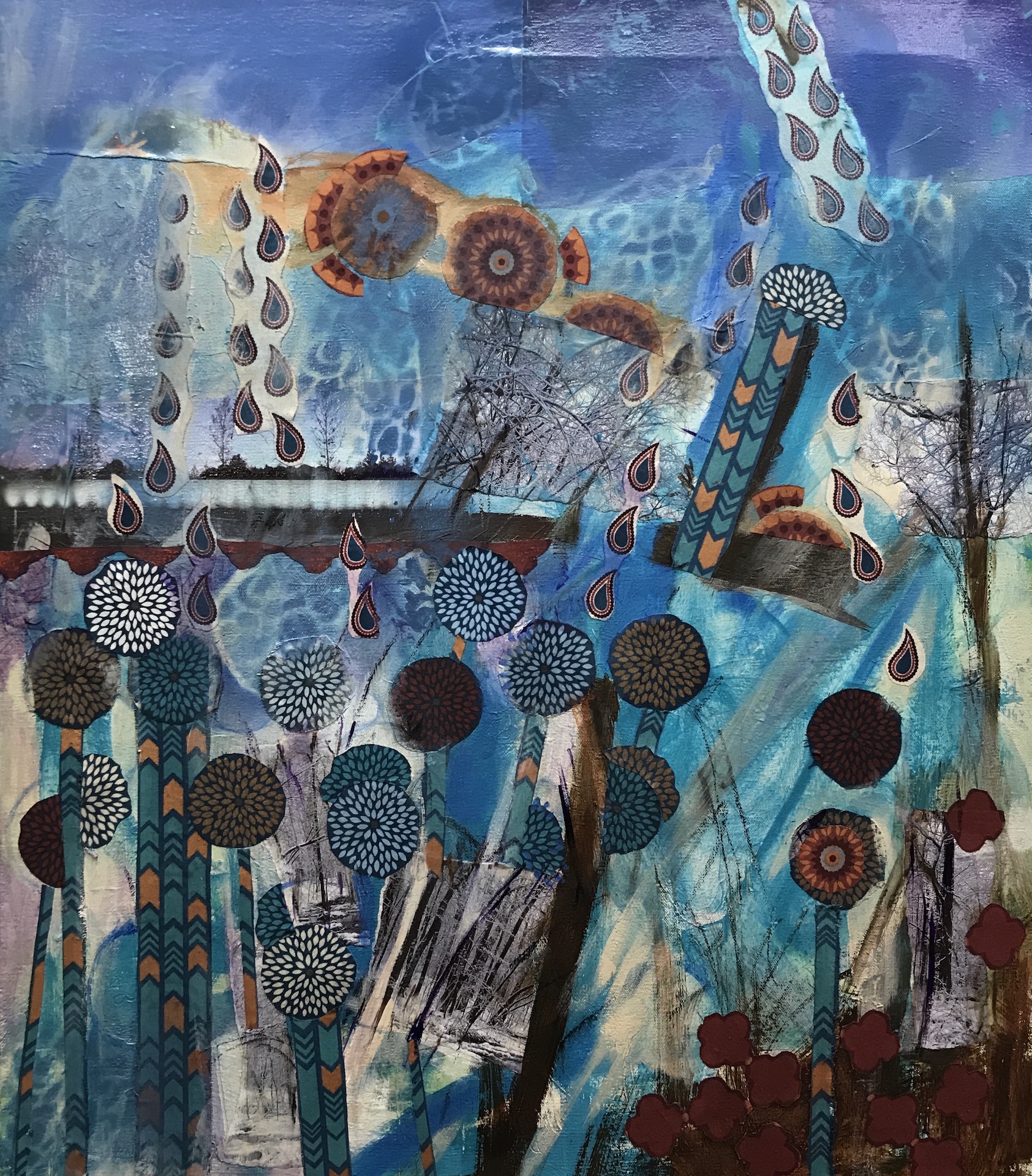
Cathy Breslaw's Installation

Cathy Breslaw's Installation
Cathy Breslaw's Installation:Dreamscape

Friday, July 2, 2021

Chinese Artist Ai Wei Wei Celebrates Global Activism in Lego Portrait Installation at the Skirball Cultural Center

Trace 

Ai Wei Wei, Artist

Skirball Cultural Center, Los Angeles

Ai Wei Wei, Artist

Through July 31st

Article by Cathy Breslaw


                             Trace      Ai Wei Wei             room installation           legos                                       2014

The installation Trace created by artist Ai Wei Wei includes 83 portraits of ordinary citizens imprisoned by their countries because of their outspoken social activism. Originally introduced in 2014 at Alcatraz prison in San Francisco, the portraits are completely comprised of thousands of lego bricks, set within three white lego panels placed on the floor within the Skirball gallery space.

The creation of Trace was shaped by Wei Wei’s own experiences as a prisoner of the Chinese government. Having previously been beaten and censored for his activism and outspoken criticism of totalitarian regimes, in 2011 he was arrested and secretly detained for 81 days, during which he was interrogated and kept under constant surveillance, and then prohibited from traveling abroad until 2015. He conceived and planned Trace during this period. Wei Wei was inspired by his young son’s legos, as he saw them as a playful, accessible and mass produced material that has global familiarity and connection.

Political dissidents from twenty-three countries comprise the portraits including the United States, Laos, Thailand, Uzbekistan, Kyrgyzstan, Indonesia, India, Russia, North Korea, Kazakhstan, Eritrea, Gambia, Turkmenistan, Belarus, Cuba, Ethiopia, Egypt, Cameroon, Sudan, Rwanda, Azerbaijan, Vietnam, China and Myanmar. While most of the names are unrecognizable to us in the United States, most are well known in their own countries and seen as advocates for human dignity and freedom of speech. Known here in the United States are portraits of Martin Luther King, Nelson Mandela, Edward Snowden, and Chelsea Manning.

The layout of portraits on the floor draws the viewer directly to the faces depicted. Due to the hard-edged brightly colored lego shape, these portraits look pixelated and relate to what we might see in surveillance tapes. On the walls of the gallery space is a bold wallpaper designed by Wei Wei entitled The Animal That Looks Like a Llama but Is Really an Alpaca. At first glance, the pattern looks decorative, but looking closely, we see hidden iconography like handcuffs, surveillance cameras and alpacas—a mascot for freedom of expression in Chinese internet culture.

We may not know the activists included in the portraits, we can understand the hard fought value of freedom of speech and standing up for social justice in our own communities. The exhibition together with Wei Wei’s decades long commitment to free speech, is consistent with the Skirball Cultural Center’s mission which is inspired by Jewish values to build a more humane society. Wei Wei’s thought provoking installation brings awareness and may inspire conversations about social justice issues common to all countries around the globe.


                                       Trace      Ai Wei Wei             (detail) room installation                   2014


The Animal That Looks Like a Llama But Is Really an Alpaca          Ai Wei Wei       wallpaper    2015


Thursday, June 10, 2021

Getty Center's Photo Flux: Unshuttering LA Exhibition Challenging Perspectives on Race

Photo Flux: Unshuttering LA

The Getty Center, Los Angeles

Through October 10, 2021

Article by Cathy Breslaw


                    Support Systems,    1984     Todd Gray   American   Mixed Media  81 1/2 x 89 in. © Todd Gray   EX.2020.6.13

The Getty Unshuttered is a free photo-sharing app directed toward building a positive community for teens to develop and express their own visual language. What better way to motivate budding photographers than to experience the recently opened exhibition at the Getty Center’s photography gallery Photo Flux: Unshuttering LA. Independent curator Jill Moniz who launched the show is the first black woman to have guest curated a show at the Getty which highlights 35 acclaimed artists of color. Since 2017, Moniz has also showcased the work of young photographers to engage and encourage them in ways to re-imagine their communities, to inspire one other and promote social justice advocacy.

Through the medium of photography Photo Flux: Unshuttering LA educates viewers young and old with the history of race seen through the eyes of Black, Hispanic and Asian American artists. Often noted as ‘transformative photography’ these powerful images portray both the violent and the sublime in our culture past and present in the treatment of people of color. Artist Todd Gray whose photograph Support Systems(1984) is the featured image of the show depicting a large black and white set of 2 photos taped together and spray painted. The image, a strong black boxer hitting a tall city building is interpreted as a metaphor of black men fighting capitalism, white supremacy and asserting black identity. This was one of a series of images Gray hung around Exposition Park during the 1984 LA Olympics, taking the photographs out of the context of a museum to share with greater impact to the broader community.

Photographer Tony Gleaton was known for his African influence in the American West, in documenting Native American ranch hands and in following the African Diaspora and black slave trade routes. Gleaton toured Central and South America photographing descendants of slaves. Usually observed and represented as passive objects in photographs, Gleaton’s models in contrast, look directly into the camera gaining an intimacy with the viewer, emphasizing the model as active participant in creating the photos. Gleaton’s subjects were people mainly considered invisible to society, poor and out of the mainstream. He wanted to create beautiful portraits, images captured with honor and respect.

Another work in the gallery is a large blue cyanotype of an undersea composition by mixed media conceptual artist Andrea Chung, who is of both Chinese and Jamaican dissent. Her beautiful and peaceful underwater seascape is the result of her research of the transatlantic slave trade of Africans brought to the ‘new world’ mostly to the Caribbean Island nations and paying homage to the many lives lost in the middle of the ocean journey to America.

Gordon (2016), an 8 foot tall chromogenic print by Ken Gonzales -Day, whose work has focused on racialized violence, is a portrait of a young Latino man casually posed, hands in pockets and dressed in a sleeveless white t-shirt. The large scale format together with the man’s eyes staring into the eyes of the viewer presents a complex and intense expression. This image was part of Gonzales-Day’s portrait series Memento Mori where he would tell his models about lynchings that took place in California after which he would count to three and then take their pictures. The results were emotional portrayals of young men, not the stereotypical threats to the world who are often profiled, and as are often viewed by the general public.

Two circular photos by artist Carrie Mae Weems portray young black girls wearing dresses with flowers in their hair posed reclining in the grass. Weems positioned these girls in ways reminiscent of the work of white master painters like Monet or Manet, challenging viewers to see the beauty and grace of these girls as they would have seen other subjects. Rather than presenting black people as tools of labor and property, they are portrayed just as any other white photo subjects.

Photo Flux: Unshuttering LA spotlights the importance of transformative photography – how a particular photographic visual language can influence us in meaningful ways and to build awareness of our own personal stereotypes. It also sensitizes us to think deeply about how we view people of color, class structures, our culture and how history has influenced our thinking.


                                  Gordon      2016      Ken Gonzales-Day       American       Chromogenic print Image: (96 × 59 3/4 × 1 in.) 
                                             Courtesy of the artist and Luis De Jesus Los Angeles    © Ken Gonzales-Day EX.2020.6.5


                                        Untitled        2016      April Banks        American     Chromogenic print        Image: 40.6 × 50.8 cm (16 × 20 in.)    

                                                               Framed:  (16 1/8 × 20 1/8 × 1in.)                      © April Banks    EX.2020.6.1.4


Thursday, February 4, 2021

Four Women Artists: Experiments in Stone at the Museum of Contemporary Art San Diego

Museum of Contemporary Art San Diego 

Experiments on Stone: Four Women Artists From The Tamarind Lithography Workshop 

Digital Exhibition Opens February 8, 2021 – Ongoing

article by Cathy Breslaw 

 Many artists focus on mastering one medium throughout their art practices over their career lifetimes. The digital exhibition Experiments on Stone takes visitors through the practices of four women artists who stepped out of their chosen mediums to experiment with lithographic prints at the Tamarind Lithography Workshop during the 1960’s. 

 Lithography is a two-dimensional ink printing method on stone or metal and at Tamarind, artists experimented and collaborated with several different printers in the process of creating their works on paper. Founded by artist June Wayne in 1960, Tamarind was to be a place to restore the art of lithography which had dwindled during the 1950s due to economic issues. In the first decade of the workshop over two hundred artists were invited to train in this method and work with master printers. Many of them were women, and among them were well established twentieth century artists Annie Albers, Ruth Asawa, Gego and Louise Nevelson. 

 Curated by Alana Hernandez, this exhibition emphasizes the lesser studied parts of these artists’ practices, and while each of the four artists investigated using differing lithographic methods, the works reveal a consistency of the core ideas each spent their art practices creating. 

Anni Albers   Enmeshed I,1963   Color Lithograph   20.25" x 27"
Collection of the Museum of Contemporary Art 
Gift of Mr./Mrs. Martin L. Gleich, San Diego, 1964.109
c) 2021 Josef and Anni Albers Foundation/Artists Rights Society(ARS), New York


 While Albers and Asawa shared a foundation in weaving, Nevelson and Gego followed inquiries into the use of line to create architectural forms and building. Albers was known for her use of vivid color relationships and patterning in weavings and textiles. She found that prints not only allowed her to create thread forms in a painterly way that loosely resembled weaving, they also sometimes incorporated using acid to produce splotched and cloudy grounds. The production of prints also gave Albers a practical way to show this two-dimensional work. 


Ruth Asawa   Desert Plant (TAM.1460)    1965   Color Lithograph  18.5" x 18.5"
Collection of the Museum of Contemporary Art San Diego
Gift of Mr./Mrs. Martin L. Gleich, San Diego, 1970.111
c) 2021 Estate of Ruth Asawa/ Artists Rights Society(ARS), New York


Asawa used ‘line’ or ‘thread’ by working with wire to create delicate weavings of three-dimensional sculptural shapes and installations referencing natural forms. Many are suspended from ceilings. Asawa attended Tamarind in 1965 where she developed over fifty prints from themes of abstractions, portraits and flower studies. Her figurative works are intimate renderings of friends and family – some are created with free-flowing sketchy lines while others use ink and washes using thick pulpy paper. In Desert Plant, Asawa used sacred radial geometry of the natural world in warm colors composed of forms resembling branches. This work highlighted her experimentation with both color and form.


Gego   Untitled (TAM.1845), 1966   Color Lithograph   22.25" x 22 1/8"
Collection of the Museum of Contemporary Art San Diego
Gift of Mr. and Mrs. Martin L. Gleich, San Diego  1970.163
c) Fundacion Gego


Like Asawa, the artist Gego (born Gertrude Goldschmidt) used wire as her primary medium and also like Asawa, her practice focused on the ‘line’. In contrast, however, Gego used wire as a kind of drawing tool to create abstracted three-dimensional forms that reflected her background in architecture, making loosely formed grid-like structures that organically flowed in space. In her lithographs, in collaboration with several printers at Tamarind (in 1963, 1966), Gego explored the containment and expansiveness of two-dimensional space using drawn black thick and thin calligraphic lines, curvy and straight. 


Louise Nevelson    Untitled, 1963   Lithograph    34" x 23.5" 
Collection of the Museum of Contemporary Art San Diego
Gift of Mr./Mrs. Martin L. Gleich, San Diego, 1964.96
c) 2021 Estate of Louise Nevelson/Artists Rights Society (ARS), New York


When Nevelson attended the Tamarind Workshop, she had not previously experimented with lithographs. She was known for her sculptures - monumental wood wall pieces and outdoor sculptures constructed from found objects and fragmented items that she re-visioned into new artwork. For most of her career she used line drawings as a tool to create her sculptural works, just as the other three artists in this exhibition had done. With lithographs, Nevelson produced prints that referenced similar themes to those in her sculptures. She would draw and build with the use of objects like erasers, lace, cheesecloth, and torn fabrics pressed into mostly black, and occasionally dark blue and brick-red ink and then applied directly on to stone. These experimental ideas were then translated to various papers into prints. 

The digital exhibition displays seventy-eight prints which come from the museum’s collection, providing a snapshot of the Tamarind Workshop created during the 1960’s and to the prints by Albers, Asawa, Gego and Nevelson. Alongside these prints, viewers will see examples of their three-dimensional artworks coming from their primary art practices. Tamarind became a blueprint for new print shops with master printers that opened up in other locations and Tamarind itself moved to Albuquerque New Mexico in 1970 and remains affiliated with the University of New Mexico. 

Experiments in Stone gives viewers a glimpse into four artists’ creative processes as they apply a willingness to make time from their established modes of art-making to experiment and ‘see what happens’.


Monday, September 21, 2020

Working In Isolation: Collaborations and Mentoring Neurodiverse Artists Brings New Direction and Inspiration to the Work of This Artist

Most artists work in relative isolation.  Our collective art practices and the creative process demands it.  It goes against the human urge to congregate and socialize.  Still, we persevere as the 'call to create' nudges us.  We then deliberately make space - intellectually, emotionally and physically. We move forward quietly, with intention and faith in the process.

Never have we been more aware of isolation than time spent in this Corona Virus pandemic environment. It is not our choice, but as artists we are familiar and in some ways ahead of the game over our fellow citizens by our familiarity and relative comfort with the loneliness of self - containment.  

During the pandemic San Diego artist Amanda Saint Claire experiments with new mediums, new themes and a fruitful connection via collaborations, and mentoring to neurodiverse artists.


Pre-Pandemic:

                                              Acquainted With the Night      acrylic and oil      45" x 65"     2019
                

During Pandemic:

                                                      Censored  acrylic and oil      36" x 48"         2020


                                                   Carrying On      oil and acrylic       36" x 48"       2020

1.  How has your work shifted during the pandemic?  Has it been a change in the process of your creating art?  The mediums you use? The themes or concepts you are thinking about?


I have always preferred to work in isolation but when the stay at home orders went into effect I spent the first week at home with my children trying to figure out what it all meant.  Once it became clear that the situation would last longer I returned to the studio and completed a large commission that had been ordered in January and put the final touches on a body of work that was scheduled for a summer show at Fresh Paint Gallery in La Jolla.  Once the days turned to weeks and I delivered the commission I started working full time delivering groceries because I felt I had to be of service.   I was in an emergency responder mode working 10 hours 7 days a week finding items people needed most.  In addition to this, the situation in my own studio changed in June and I started subletting one of the rooms in my studio to neurodiverse emerging artist, Katie Flores. 


I was still not creating my own work however, and noticing the lack of balance, I decided to set up two new opportunities for myself to explore at the studio to peak my curiosity.  I bought a large supply of acrylic paint and mediums (I am an oil painter) and  I invited another artist to my large studio to work on my figure drawing.  While I have worked with figures in the past, my primary concern is capturing emotional states so looking carefully at references was a new muscle to develop.  Also, learning to accept the limitations of acrylic paint and embrace the good parts of the media was another challenge that kept me focused. I found both the media and the reference drawing challenging but I was very happy with the results of that effort and I'm sure I will continue to employ and develop those skills.


I became very focused on the repeating theme of women lifting up and loving other women. I continued to throw myself into the role of Katie's mentor and our hours together increased due to the closure of all her other programs and I was able to watch her blossom with great delight  while continuing to work on my figures of women.


It wasn't until later that I realized that I was painting about myself and my work with Katie and my role as a mother to two teenage daughters and the need to unite against a patriarchal system that permeates all aspects of society, including the art world.


2.  What have you discovered about yourself as an artist during this pandemic?


I have a deep seated desire to seek justice for those whom society has disregarded.  I think perhaps this started for me as child watching my deaf grandparents struggle to be treated with respect.  I could hear the things people said about them when we were in public and it made me angry.  This is likely why I went to Tulane Law and  became an attorney and practiced law, although I never went on to work with  human rights organizations because I wasn't truly aware of my motivations.  I just felt angry and life had other plans for me once I married, moved to S.E. Asia and had 3 children. 


 When I shifted to being a full time artist in my mid-40's I felt like I was finally in my right skin, but I struggled to find satisfaction to effect lasting change in the world. I felt selfish and that  I was turning my back on humanity but it was all I felt I could do. I eventually came to understand that by creating a place of peace within I was contributing to peace in the world.


The gift of the pandemic has been the opportunity to work one on one with a talented young woman, Katie Flores,  who has a passion, work ethic, and talent to become a professional artist but cannot do so on her own because of the limitations she has due to being diagnosed as Austistic as a young girl.


I have discovered that I have a gift as a mentor. I can finally feel at ease as an artist creating opportunities for another artist that would otherwise be marginalized and excluded from fully participating in the world.  I have introduced Katie to other artists and lined up shows for her and set up an e-commerce website.


The pandemic has given me the gift of marrying these two parts of myself and restoring peace within that I am taking right action to affect change in the world.


3.  What have been your biggest challenges working in isolation?  Surprises?


I can't say I had a challenge to my work because I have my own studio.  The challenges were more mental, emotional, and physical.  I just didn't feel right going to paint, outside of finishing projects.  I felt I could be of more value delivering groceries and supplies to those unable to go out.


The biggest challenge was not seeing my friends and not having access to my gym and feeling guilty that my children were just sitting at home all the time. I had just established a fitness routine at age 50 and was finally feeling that I had a nice work/life balance when the pandemic hit.  I haven't been able to find good routines since.


The surprise was that I would return to school to finish my certification as an Expressive Arts Consultant and Educator during the pandemic and discover that I can finally feel like I am living in my truth by working towards justice as an artist working with neurodiverse artists.  


Periods of darkness have always held truths for me to discover.  I started painting and discovered I was an artist during a long period of depression and so it makes sense to me that another trying situation would reveal another truth to me.  I look forward to a long and fruitful career collaborating with and mentoring other artists.


www.amandasaintclaire.com

https://www.instagram.com/amandasaintclaire/

https://www.instagram.com/amp_artistproject/

https://www.linkedin.com/in/amanda-st-claire-5809872a/


Tuesday, September 8, 2020

Working In Isolation: Loss of His Father and Step-Father, This Artist Turned Grief Into Inspiration, Creating an Exhibition for Queer Artists

Most artists work in relative isolation.  Our collective art practices and the creative process demands it.  It goes against the human urge to congregate and socialize.  Still, we persevere as the 'call to create' nudges us.  We then deliberately make space - intellectually, emotionally and physically. We move forward quietly, with intention and faith in the process.

Never have we been more aware of isolation than time spent in this Corona Virus pandemic environment. It is not our choice, but as artists we are familiar and in some ways ahead of the game over our fellow citizens by our familiarity and relative comfort with the loneliness of self - containment.  


Los Angeles artist Ryan Henisey creates sculpture, installation and performance art. Having lost his father and step-father during the pandemic, he has turned his grief into inspiration and curated an exhibition called Queer Isolation at the TAG Gallery that runs through the end of October, 2020.


Pre-Pandemic:

           Are We Out of the Woods   hanging paper cut-outs of trees, papier mache hearts with wings  2019


During Pandemic:


                   Henisey Talks About Performance in Interview      Link:     https://youtu.be/4Ww2Fas79k8


                    QUEER Isolation           Curated exhibition, TAG Gallery                  August - October 2020


1) How has your work shifted during the pandemic? Has it been a change in the process of you creating art? The mediums you use? The themes or concepts you are thinking about?

 The pandemic has slowed me down. And that’s a great thing.


In “regular” life, I‘d be operating at a mile a minute, balancing a career, the needs of an artist cooperative, my own practice, and life. All while zipping around in my little orange car.


But with global shut downs, Stay Home orders in California, and increasing needs at the gallery, I’ve slowed my creative and exhibition goals to better fit the shifting world.


Creatively, I’d planned on debuting in China with a cohort of Los Angeles Art Association artists, exhibiting a solo show at TAG Gallery, and more. As those plans delayed, I decided to take time explore new ideas and focus on elevating the cooperatives gallery experience for both our artists and patrons.


This space has allowed me to focus on artwork outside of my normal practice. I’ve experimented with new materials—such as papier mache, plaster, and concrete.


And rather than focusing on my own exhibition, I was inspired to make space for queer artists. QUEER isolation, was a small celebration of pride that displayed through August. The show is in my studio at TAG Gallery and features 20 different artists, from as far west as Honolulu, Hawaii to as far east as South Bend, Indiana. The display is extended through the end of October 2020.


It’s been a joy to see and experience the art of others, especially in this time where we are isolating and keeping distance.


2) What have you discovered about yourself as an artist during this pandemic? 


Oh my! So much, but everything that feels new is also an old friend.


I’ve spent a lot of time on self reflecting, taking more than a handful of personality tests. Going into

the pandemic, was a period of loss for me—both my father and step-father passed within a month of 

each other, leaving the hollow places we all experience with grief. The personality tests were a way to 

ground myself (and look out for those parts of myself then can be read negatively by others).


In the refreshers, I was struck by how often my ruthless drive towards accomplishment was discussed. Across all of the tests, that thread of zeal was identified as important and set part of my personality.


The amplification of our emotional states in isolation has certainly shown that ruthlessness to be true. 

I tend to be unrelenting when pursuing a worthy goal.


While that part of myself is not new—nor even new to me—the hyper awareness of it through grief 

and isolation is something that has changed. I’m not likely to apologize for my zeal, but I will forewarn you of it.


 3) What have been your biggest challenges working in isolation? Surprises?


My biggest challenge in isolation was being “trapped” in the same room. Until July, I was on special assignment for work, responding specifically to Covid-19. The hours were long and the impact was

quite stressful (both are atmospheres where I thrive). But the small spare room at home (half artist studio, half partner’s office) was much too small and confining for me.


I really missed the studio most. Though only slightly larger of a room, my work/show space in the

Loft at TAG Gallery is one of my favorite things. Having it closed from March to June was a loss.


Conversely, I was able to put more hours in fine art creation and experimentation. So while it was

a challenge to keep myself in a smaller space than I’d grown accustomed, it was nice to spend more time making.


Links:


Tuesday, September 1, 2020

Working In Isolation: Without Anticipation and Concern of a Public Exhibition, This Artist Feels Free to Create Unselfconsciously

  Most artists work in relative isolation.  Our collective art practices and the creative process demands it.  It goes against the human urge to congregate and socialize.  Still, we persevere as the 'call to create' nudges us.  We then deliberately make space - intellectually, emotionally and physically. We move forward quietly, with intention and faith in the process.

Never have we been more aware of isolation than time spent in this Corona Virus pandemic environment. It is not our choice, but as artists we are familiar and in some ways ahead of the game over our fellow citizens by our familiarity and relative comfort with the loneliness of self - containment.  


San Diego artist Susan Osborn has changed mediums from assemblage to painting and collage and is loving this new journey of experimentation during COVID.


Pre-Pandemic:


                                Duck Roll      found object assemblage    12” h x 6” w x 3”d    2019


During Pandemic:


            Rain, Flowers, Sunset      paper and fabric collage, acrylic      28” h x 24” w x 3/4” d    2020


1.  How has your work shifted during the pandemic?  Has it been a change in the process of your creating art?  The mediums you use? The themes or concepts you are thinking about?


I have always used collage and mixed materials in my work.  From 2007 until 2020, I was occasionally doing mixed-media collage painting but I was mostly creating assemblages.  Yet more and more, I was feeling an urge to paint but needed to know more about the new painting materials before I could start. When thrift stores went on lock down and estate sales ended, I had no place to search for assemblage objects I needed. It was a perfect excuse to learn about the new acrylic paints and techniques from Golden Paint demonstrations.


I began experimenting on small panels and would enlarge the size a bit more with each new work. Then in I late February I read about an artist using fabric in her paintings with an emphasis on pattern.  I realized that the patterns in fabric could dictate the theme of my work.  I began to collage fabric pieces onto wood or canvas. 


2.  What have you discovered about yourself as an artist during this pandemic?


As I painted more and more I realize how sensuous the materials are.  Seeing colors mix and the smoothness of pushing a loaded paintbrush over a surface brings joy, surprise and excitement. My training is as a painter. I didn’t realize how much I have missed it and how much it is a part of me.


Lately, while I am creating, I am no longer concerned about what others see in my work.  I am focused on creating while I see and work with wild abandon.  This could be because I have no venue for exhibition for my work now that galleries, libraries and colleges are closed.


3.  What have been your biggest challenges working in isolation?  Surprises?


It is difficult because I lack inspiration from seeing art in galleries and museums.  Seeing art in person gives me so many new ideas. I have turned now to my books and virtual exhibits which aren’t the same because they lack the color and space.


I get saddened when other artists say they can’t work.


I miss the critique from other artists and studio visits that give me feedback on my work.


I miss not being able to get my work out where it can be seen. I am at high risk due to my asthma and feel threatened even going into a gallery with a mask. 


I miss not being able to pick up work that was in three exhibits at libraries and college because of lockdown. 


As things open up again, gradually, I wonder if my attitudes with change. Will I be enthused about promoting my artwork?  Will I be happy because my artists friends begin working again and meeting me in my studio (or I in theirs) with great art critiques and ideas?  Will I be inspired by seeing all the new work in galleries? Time will tell. 


                                                    Susan Osborn in Studio   2020


Susan J. Osborn

Facebook: susan j osborn art

Instagram: susanjosborn

www.osbornart.com


Monday, August 31, 2020

Working In Isolation: Fear Intensifies For This Artist Throughout The Pandemic As Healing Comes with Creating Art

 Most artists work in relative isolation.  Our collective art practices and the creative process demands it.  It goes against the human urge to congregate and socialize.  Still, we persevere as the 'call to create' nudges us.  We then deliberately make space - intellectually, emotionally and physically. We move forward quietly, with intention and faith in the process.

Never have we been more aware of isolation than time spent in this Corona Virus pandemic environment. It is not our choice, but as artists we are familiar and in some ways ahead of the game over our fellow citizens by our familiarity and relative comfort with the loneliness of self - containment.  

San Diego Artist Linda Litteral while having been busy with a combination of a residency and creating art in her studio, finds the isolation has intensified the negative psychological issues that ironically have been a source of creativity and healing.


Pre-pandemic:

Armor            11"  x 12" x 19 " tall        Porcelain       2015


During Pandemic:


Pandemic Pots     4" dia x 9" tall approximate each separate vase and lid       porcelain       2020


                                                                Linda In The Studio

1)     How has your work shifted during the pandemic? Has it been a change in the process of you creating art? The mediums you use? The themes or concepts you are thinking about?

My work tends to evolve slowly, the content of childhood sexual abuse, trauma, and feminist issues stays with everything I do. I was at a residency at Desert Dairy in the beginning of the pandemic and stayed for 2 weeks. The energy and beauty of the desert and looking out at Joshua Tree National Monument was wonderful. It gave me a quiet entrance into the pandemic. When I was back home and in my studio, I really did not want to paint and have been working primarily in clay. I do not think my work has changed much, it just continues its evolution. I started working on spirals and how to carve and draw them at the residency. They have always been in my work but, seem to be central for now. I am working on a 7 foot totem that will be the center of a labyrinth I designed that the Feminist Image Group is doing for Desert Dairy space. It gives the group something to look forward to and we will go out and construct it this fall.


2) What have you discovered about yourself as an artist during this pandemic? 


It has been a difficult time to stay focused and moving forward. The lack of control over what I can do is too closely related to my childhood lack of control as an incest survivor. PTSD has raised its ugly head. As an artist I have pushed to stay busy as it is the one thing, art making, that allows me some psychological peace. While I am making art it is calm and I have purpose that makes sense in the moment. I find I like not having to have all the deadlines and constrictions on studio time that we had before the pandemic. I am pretty good at being an introvert and spending time with myself in my art making capacity.


The creative process is an innate human characteristic. This time has solidified that understanding for me. If we continue to repress our children's creativity by defunding all the arts, and trivializing creativity's value, we will be building the world that the Republican Trump administration stands for. Lies, gluttony, greed, hatred, misogyny, bigotry, etc.... Creativity is a shining light to a better world.  


3) What have been your biggest challenges working in isolation? Surprises?


The biggest challenge has been staying focused and contending with the past. While I have been speaking with my therapist throughout, I miss the one on one in person aspect of healing. The biggest surprise has been the way I have isolated almost completely. I rarely talk to anyone and while I do miss people, I have not pushed to have a lot of contact with anyone. There is fear involved in going out into the world that seems to be based in past traumas, and amplified by the ongoing trauma of the pandemic. The challenge will be to integrate the healing to encompass past, present and future that we cannot know. Then to address the healing evolution with art work.


Linda Litteral

www.lindalitteral.com

www.healingartprocess.com

Instagram: @lindalitteralartist

Facebook: @lindalitteral

Facebook: @lindalitteralartist